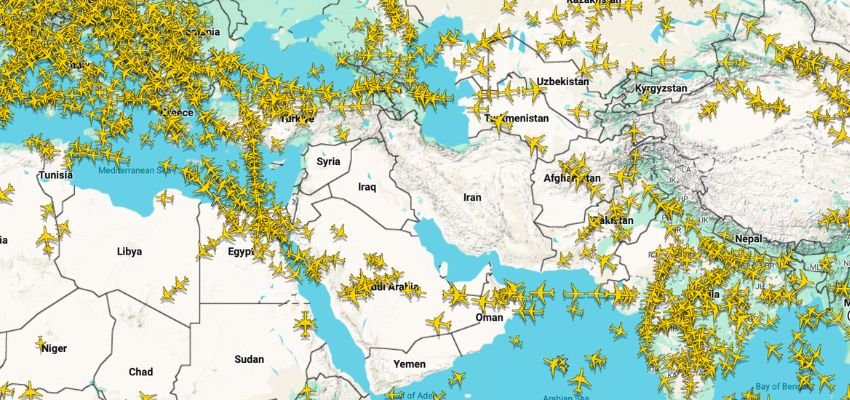
In March 2026, as tensions in the Middle East arose, as you read, the worldwide aviation industry saw a dramatic shift. Military strikes that involved Iran, the United States, and Israel resulted in temporary airspace closures and strong security warnings across the region.
As a result of the US-Iran war, major international airlines have halted their flights, relocated aircrafts or are avoiding going from the Middle Eastern route altogether. Some of the vital aircrafts that connect Europe, Asia, Africa, and the United States have been stopped until March, April, or later.
This blog provides comprehensive up-to-date information on which airlines are avoiding the Middle East airspace in 2026, who is still flying, and what you need to know when you’re in the middle of this chaos.
Why are the Flights being Suspended?
All airlines’ first priority is their passengers and operational stability. Besides the government’s official guidelines, a few concerning reasons for stopping flights are:
- Because of geopolitical unrest and missile risks, the skies have now become unpredictable and dangerous for civilians.
- It is time-consuming and requires substantial funds to implement changes in the ‘No-Fly Zone.’
- There is constant concern regarding the safety of people and airport infrastructure in an active conflict zone.
Which Airlines are Avoiding Middle East Airspace Right Now?
Since the situation remains risky, most fights are currently on hold. The carriers that are officially cancelled as of March 2026, April, and even beyond are:
British Airways – They have put a hold on their flights to and from Amman, Bahrain, Doha, Dubai, and Tel Aviv until further notice. Even rescue flights and services to Abu Dhabi have stopped due to instability.
They have mentioned – ‘If you are due to fly between London Heathrow and Abu Dhabi, Amman, Bahrain, Doha, Dubai, Tel Aviv or Riyadh up to and including 15 March, you can change your flight date free of charge to travel on or before 29 March.’
Lufthansa Group (Lufthansa, Swiss, Austrian, Brussels Airlines, Eurowings, ITA Airways) – This German Airline group has also cancelled flights to many Middle Eastern destinations, including Beirut and Erbil, until mid or late March.
The airline mentions that “They continue to work in close coordination with the relevant authorities and will resume normal operations as soon as conditions allow for it.”
Air France and KLM – have cancelled their current flights to Middle Eastern regions like Tel Aviv, Riyadh, Dammam, Beirut, and more till mid-march and early April. Air France-KLM has also raised its long-haul booking prices because of the rise in fuel costs driven by the current situation.
Aegean Airlines – Greek Air carrier, has put a hold on flights to destinations including Iraq, Israel, Jordan, Lebanon, Saudi Arabia, and the United Arab Emirates. Flights to Tel Aviv, Beirut, Erbil, Dubai, Riyadh, and Baghdad are all cancelled till March or later.
Vassilakis says, “The past 12 days since the outbreak of the latest crisis in the Middle East have created a heightened level of uncertainty for the airline’s network.”
He also added, “The airline’s planned entry into the Indian market, initially scheduled for this spring, will be postponed until 2027.”
Air Canada – This carrier has suspended its flights to Dubai until the end of March and also canceled flights to Tel Aviv until early May.
Delta Airlines – The U.S carrier has halted its flights to and from New York to Tel Aviv until the end of March and early April. They have also warned their passengers to avoid air travel to the danger zones during this situation.
Cathay Pacific – The Hong Kong Airline had stopped its flights to and from Dubai and Riyadh until the end of March.
Finnair – The Finnish carrier put a hold on its flights between Helsinki and Gulf Hubs of Doha and Dubai, and will also avoid the airspace over destinations like Iraq, Iran, Syria, and Israel, which will lead to time-consuming detours. Finnair mentioned, “Travelers with time-sensitive schedules, such as CEOs heading to Dubai’s MICE events or oil and gas contractors rotating through Qatar, should look at one-stop routes via Istanbul, Muscat, or European hubs still offering limited Gulf services.”
Turkish and Pegasus Airlines – Both of these airlines have canceled and removed Iran flights from their schedules until mid to late March, avoiding destinations such as Iraq, Amman, Beirut, Kuwait, Bahrain, Doha, Dammam, Dubai, Abu Dhabi, Jordan, Syria, Lebanon, and Sharjah.
Alternative Airlines that are still operating
Though most flights have been cancelled amid the tension, several airlines are providing essential services by partially resuming operations in the Middle East.
Emirates- They cancelled their flights during the early conflict period, but are now operating some limited flights from Dubai and Abu Dhabi. Still, full services will depend on the current conditions. They are prioritizing only passengers with confirmed bookings.
Qatar Airways- A small number of flights have been restarted from Doha early this March. They are gradually increasing their flights depending on the situation.
Etihad Airways – Some commercial flights have been resumed to Abu Dhabi, Riyadh, and Jeddah.
Air India and Air India Express – A few operations to and from Muscat, Delhi, and Mumbai have been resumed. Special flights to West Asia have also started.
Saudia and Turkish Airlines – have restarted regional routes after being halted. Turkish flights have also started to some countries in mid-March.
Action Plan for Travellers
Average passengers would face major changes in the cost, duration, and safety of international travel, but during this crisis, have a plan, proceed carefully, and be mindful of which airlines are avoiding the Middle East airspace in 2026 when booking your next flights.
- Flyers should avoid going to airports without a confirmed reservation.
- Check all your flight status, government guidelines, and stay up to date regarding any cancellations or changes.
- Make sure you have travel insurance that covers all delays and rerouting.
- Sign up for official alerts so they can reach you if you get stuck or arrange any rescue flights.
- Pack extra food and bring power banks, in case the delay is longer due to rerouting.
Conclusion
Overall, as of March 2026, the situation remains unpredictable, with routes opening and closing without warning. The Middle East has always been a bridge between East and West and is currently facing instability. If you have upcoming plans, remember to keep your documents ready and patience high.
Things could change by the minute during this time, so make sure to keep checking your flight status for any updates.
FAQs
Currently, only essential travel or passengers with existing reservations are allowed into the UAE. Most of the flights are still cancelled.
Yes, a major part of the Middle East airspace has been closed or restricted due to military actions involving Iran, Israel, and the U.S
Yes, most airlines are giving free rebookings or full refunds on cancelled flights.
Very limited international carriers are still flying; otherwise, mostly flights are being cancelled until March, April, and beyond.
No, it is not safe to travel to the Middle East right now amid geopolitical tension and major government warnings about conflicts and missile risks.